A summer veranda is an open or lightly glazed outdoor room for the warm season. An insulated veranda is a heated part of the house for the whole year. The difference lies not only in the walls but also in the foundations, documents and price.
The two verandas look alike, but they are different structures. A summer veranda serves from spring to autumn. An insulated veranda becomes one more room of the house that is used in winter too. Before choosing it helps to understand how the room will be used every day, what it will cost and which documents will be needed.
A summer veranda is a roof, a floor and railings or light glazing, used in the warm season. An insulated veranda is a heated room used all year. A summer veranda is cheaper and simpler. An insulated veranda needs a more careful design, better foundations and often other documents too. A middle option is a glazed veranda without heating, which extends the season in spring and autumn.
A summer veranda is a wooden structure with a roof and a floor. It can be fully open, have railings or partly closed walls. Sometimes it is glazed with simple glazing to protect it from wind and rain. A summer veranda has no heating, and its walls and floor are not insulated.
Such a veranda works well for meals outdoors, for resting in the shade and as a place for garden furniture. The catalogue has both open verandas, for example an open wooden veranda with a mono-pitch shingle roof, and glazed ones, for example a 3.5 x 4.8 m glazed veranda with a terrace.
An insulated veranda is a heated room. It needs insulated walls, floor and roof, windows and doors suited to keeping the heat in, and heating or heat from the house. In essence it is an extension of the house. It can hold a dining area, a workplace or a winter garden.
For an insulated veranda the foundations, the roof connection to the house and the protection against moisture take more work and a more careful design. That is why it costs considerably more than a summer veranda of the same size.
| Summer veranda | Insulated veranda | |
|---|---|---|
| Use | warm season | all year |
| Walls | open, railings or simple glazing | insulated walls and windows suited to keeping heat in |
| Heating | none | needed |
| Foundations | lighter solutions | more carefully designed |
| Documents | usually an explanatory memorandum for the extension | a building design may be needed |
| Cost | lower | higher |
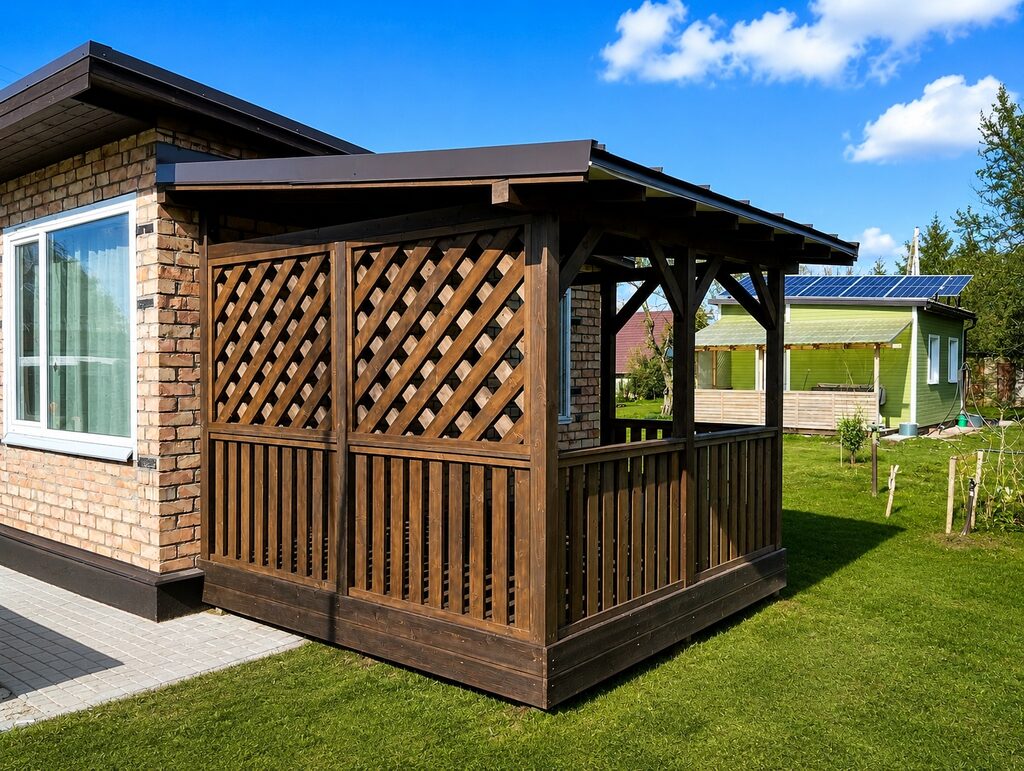
Both kinds of veranda built onto a house change the volume of the house. An insulated and heated veranda also increases the heated floor area of the house. This can affect the type of documents and the cadastre details. Before deciding it is worth reading the article does an extension need a building permit and asking the local building authority which documents a particular plan requires.
Many families choose a middle option. It is a wooden veranda with glazed walls but without heating. Such a veranda protects from wind and rain and extends the season in spring and autumn. In winter it stays a cold room. The differences between an open and a glazed veranda are covered in a separate article, open or glazed veranda.
If the wish to insulate the veranda may come later, that has to be decided at the very start of the project. The structure, foundations and roof pitch must be planned differently for an insulated room. A later reconstruction usually costs more than the right choice made straight away.
Price guidance for summer verandas by size is in the article wooden veranda price 2026.
On a summer veranda the furniture and textiles have to be moved somewhere dry in autumn. On a glazed veranda they can stay longer, because the room is protected from rain. On an insulated veranda furniture and plants can stay all year. In daily life this difference often matters more than the price, so it is worth picturing how the veranda will look in November and February.
Often it can, if the structure allows it. This is best agreed when ordering, so that the posts and roof are suitable for glazing.
A portable heater is possible on a cool evening, but it does not turn the veranda into a warm room. Fire safety requirements must be followed according to the device manufacturer's instructions.
A small house is often well served by a summer veranda or a glazed veranda without heating, because it adds space in the warm season without large costs. An insulated veranda makes sense when the house lacks space in winter.
An unheated veranda is cold in winter, so frost-hardy plants do better there than houseplants.
We usually reply within an hour on working days.
We use cookies to understand how the site is used. They are only switched on with your consent.